
Horizontal vs. Vertical Airflow: Why Australian B2B Buyers are Shifting to Stainless Steel Dehydrators
Dehydrator Insights & Market Technical Analysis
In Australia’s premium household and light commercial kitchen appliance markets, food dehydrators are undergoing a profound structural and technological transformation. In the past, round stacked dehydrators made of plastic with vertical airflow designs dominated mainstream import and wholesale channels due to their low cost and ease of transport. However, over the past two years, the behavioral patterns of Australian B2B buyers, e-commerce supply chain managers, and brand owners on search engines like Chrome have shifted significantly. Technical inquiries and procurement searches regarding “stainless steel dehydrators” and “horizontal airflow” have experienced explosive growth.
This shift is by no means accidental. It is driven by a combination of factors: the strict upgrading of food safety standards in the Australian market, unique local consumer scenarios (such as the high-frequency making of beef jerky and pet treats), and exceptionally high electricity costs. For B2B suppliers committed to deeply cultivating Australian appliance channels, understanding the underlying technical logic of airflow design and body materials is the core key to capturing high-value orders.
1. The Core Technological Debate: Why Horizontal Airflow Has Become the Top Choice for Australian Procurement
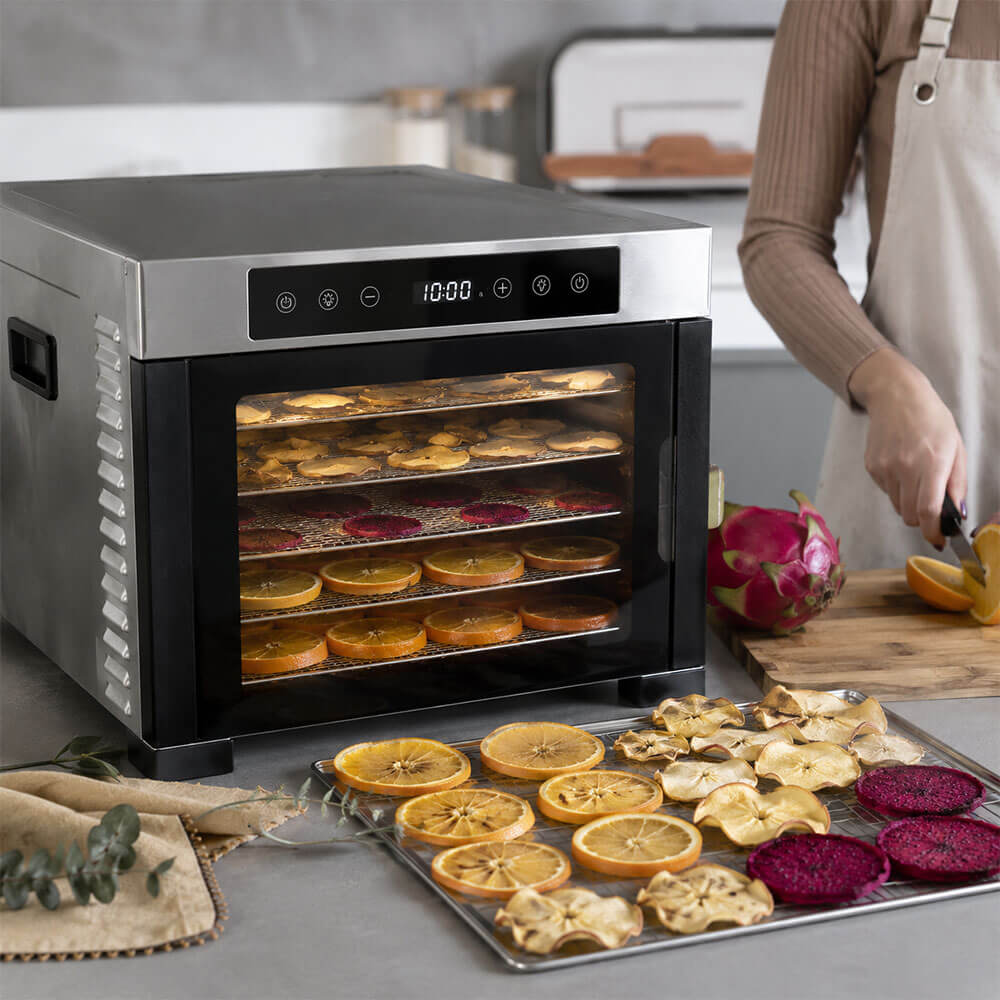
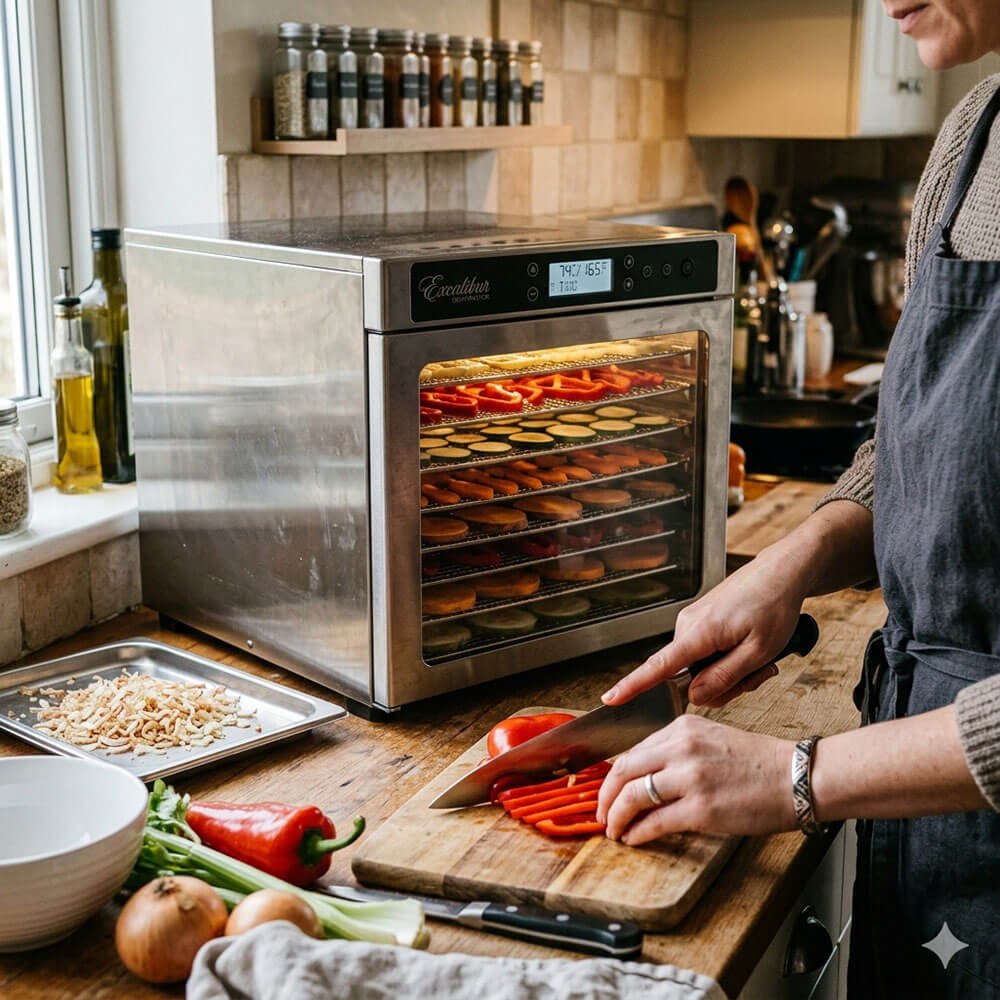
Airflow design directly determines the efficiency and quality consistency of food dehydration. Vertical airflow typically places the heating element and fan at the bottom or top of the machine, forcing hot air to travel vertically through layers of stacked trays. In contrast, horizontal airflow utilizes a rear-mounted fan and heating assembly, pushing hot air evenly from the back to the front, flowing parallel across all tray levels.
[Technical Diagram Description: Airflow Comparison in Food Dehydrators]
Left Side (Vertical Airflow): Illustrates a heat source located at the bottom, with hot air rising vertically through a stack of round plastic trays. The bottom trays experience strong airflow and high temperatures, while the top layers receive weak airflow and high humidity, leading to significant uneven drying and severe heat loss.
Right Side (Horizontal Airflow): Illustrates a cabinet-style structure where the rear panel integrates a high-power fan and heating tubes. The airflow travels in a straight, horizontal line parallel through each layer of stainless steel mesh trays, creating a sealed, uniform convection cycle that ensures simultaneous dehydration across all layers.
Australian B2B buyers are pivoting completely toward horizontal airflow, primarily due to the following two technical pain points:
Zero Labor Intervention (Eliminating Manual Rotating and Layer Swapping): Labor costs in Australia are exceptionally high. Whether for premium middle-class households or light commercial artisan workshops, users strongly resist machines that require them to manually rotate or swap tray positions at timed intervals. Because vertical airflow creates a massive temperature and humidity gradient between the bottom and top layers, it easily causes a phenomenon where the bottom burns while the top remains wet. Horizontal airflow, through closed-loop convection formed by the rear fan, ensures 3D uniform temperature without dead zones, achieving truly unattended, intelligent operation.
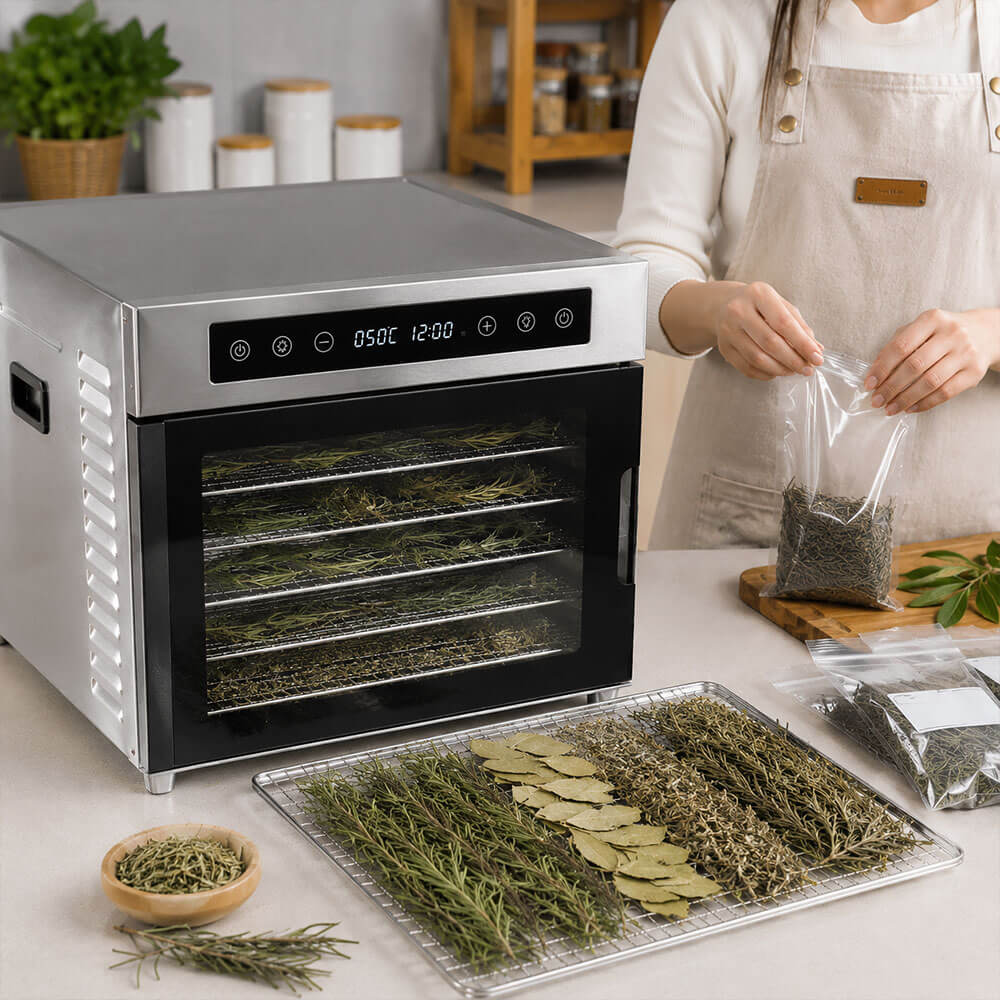
Thwarting Flavor Cross-Contamination: In a vertical airflow system, the moisture and odors evaporating from lower-layer ingredients rise directly and permeate the food on the upper layers. Dehydrating herbs, fruits, and meat simultaneously under these conditions results in a disastrous degradation of flavor quality. Horizontal airflow’s parallel streams turn each tray level into an independent air channel. Moisture is discharged directly through front door gaps or exhaust vents, effectively preventing the cross-contamination of flavors between different ingredients.
2. The Material Red Line: How Stainless Steel Directly Addresses Australian Food Safety Pain Points
In the Australian market, material choice is not just about aesthetics—it is an impassable “safety red line.”
Australian consumers are among the world leaders in their demands for health and environmental sustainabilityBPA-free and Plastic-free kitchen appliances consistently maintain high popularity
In comparison, full stainless steel dehydrators offer overwhelming B2B market advantages:
- Sanitary and Commercial-Grade Durability: Local Australian households and light commercial environments frequently use dehydrators to process fat-rich meats
. Plastic trays tend to become brittle and yellow under prolonged high temperatures, and oils easily penetrate plastic micropores, making them extremely difficult to clean thoroughly and prone to bacterial growth . Food-grade stainless steel mesh and inner liners are corrosion-resistant and high-temperature resistant, allowing them to be placed directly into dishwashers, fully meeting commercial kitchen hygiene standards .
- Structural Rigidity and Premium Market Positioning: Stainless steel cabinet machines offer B2B buyers substantial premium pricing space. They not only provide a strong “professional-grade, built-like-a-tank” visual impact on the retail end (such as Amazon AU or local independent sites) but also adapt better to structural stability under long-term humid conditions during ocean freight, reducing damage rates in cross-border logistics.
3. "Hard Metrics" of Local Australian Core Application Scenarios
Australian procurement buyers rely heavily on the actual application scenarios of end-users when selecting products. Currently, there are two core, rigid growth drivers for food dehydrators in Australia:
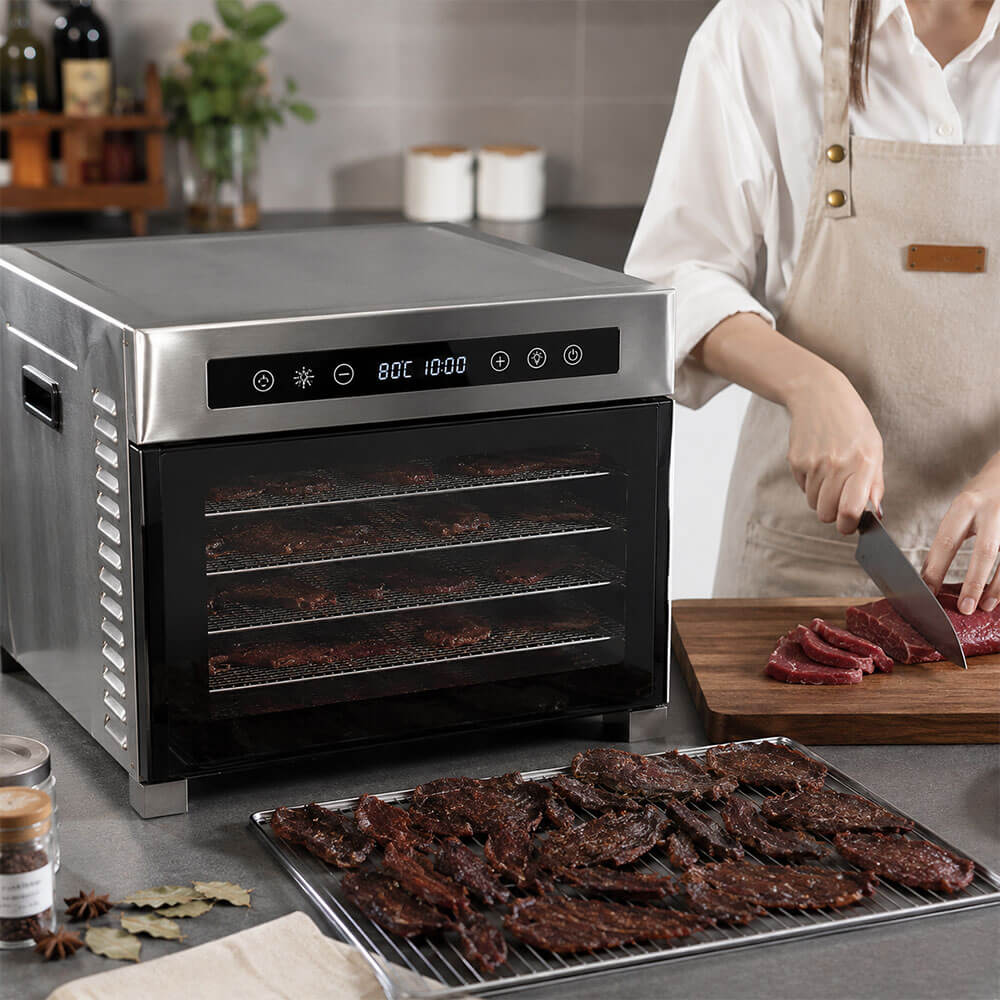
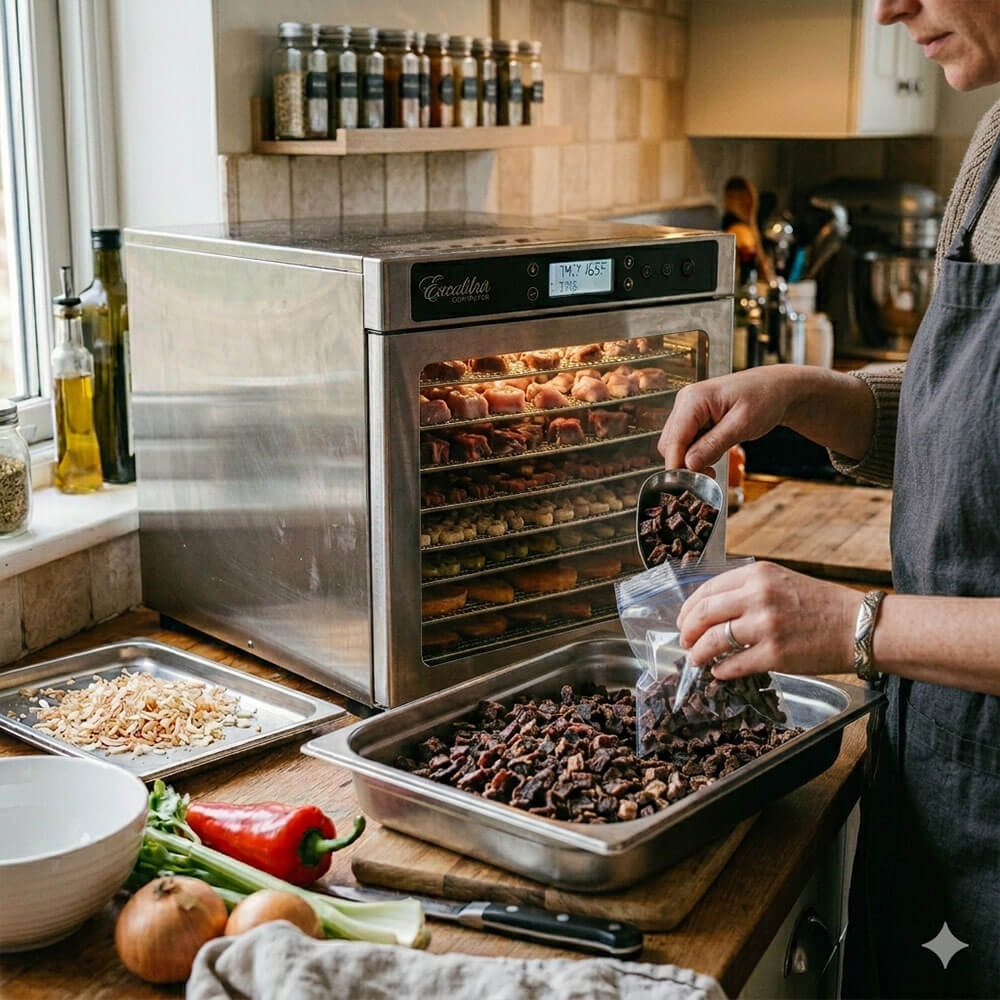
- Safety Standards for Beef Jerky Making: Australians are incredibly passionate about DIY homemade beef jerky. According to safety recommendations from the Food Standards Australia New Zealand (FSANZ), to completely kill pathogens like Salmonella and E. coli that may exist in meat, dehydration equipment must be able to quickly and stably reach an internal temperature of 68°C (155°F) to over 70°C in the early stages of drying. Ordinary plastic round machines struggle to meet this rigid metric due to rapid heat loss and poor temperature control precision. Full stainless steel horizontal airflow cabinet machines, with their excellent insulation and precise digital thermostats, have become the gold standard for safe jerky production.
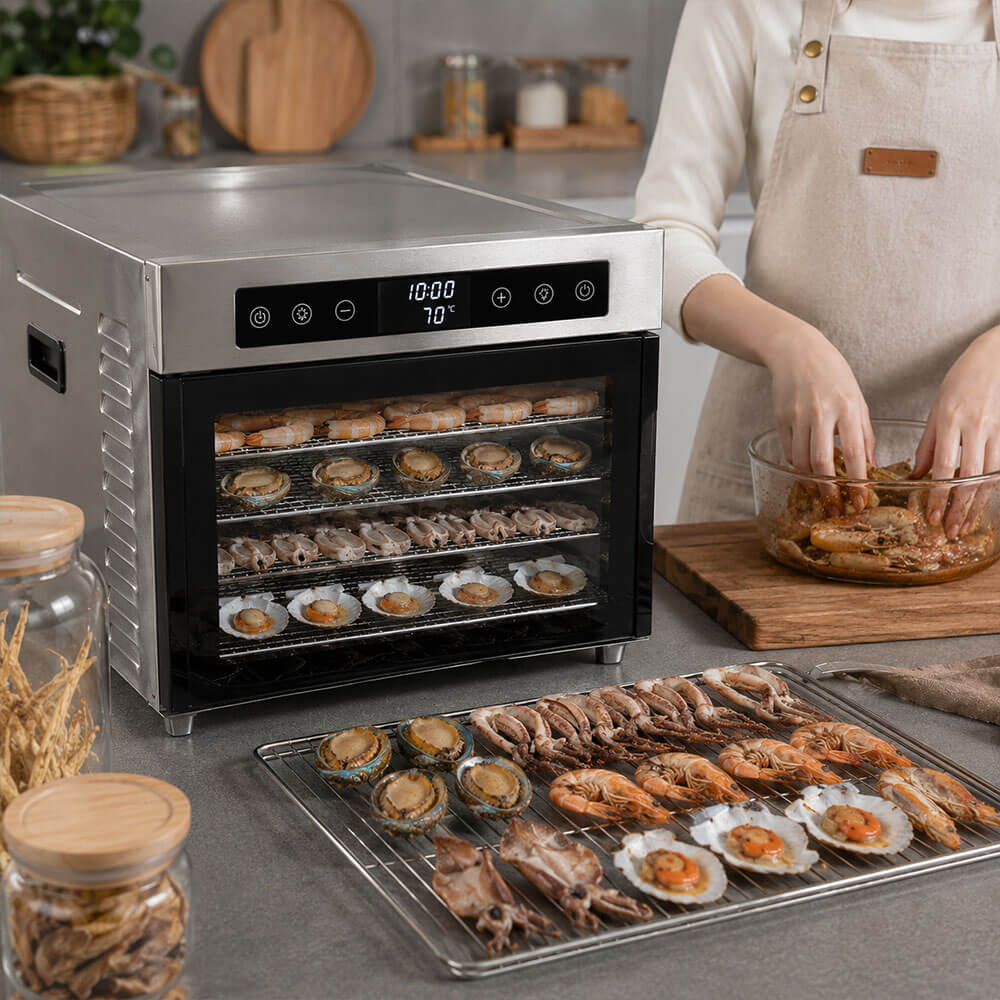
- The Booming Premium Dog Treats Market: The high pet obesity rate and health concerns in Australia have triggered an explosion in the “pure meat, zero-additives pet treat” market. A large number of micro-B2B businesses locally (such as pet shops and market stallholders) use 6- to 12-tray light commercial dehydrators to process beef liver, chicken strips, and beef lungs at high frequencies. This high-load, long-hour usage scenario completely eliminates plastic toy-like machines that cannot run continuously for more than 24 hours, leaving full stainless steel commercial-grade dehydrators as the only viable option.
4. The Economic Equation: Energy Efficiency Logic Under Australia's High Electricity Costs
Because electricity prices in Australia consistently rank among the highest globally, end consumers are extremely sensitive to power consumption (Energy Efficiency) when purchasing high-power heating appliances. This is also one of the technical details that B2B buyers repeatedly research on Chrome.
On the surface, full stainless steel cabinet dehydrators have a higher rated power than plastic round machines due to their high-power heating tubes. However, in terms of thermodynamic logic, stainless steel cabinets offer excellent thermal energy storage and tightly sealed insulation effects. Once the internal temperature reaches the set value, the digital temperature control system puts the heating tube into an intermittent working state, relying on the metal walls to reflect heat and maintain high thermal convection. Conversely, ordinary single-layer plastic machines have extremely thin walls that lose heat rapidly, forcing the heater to run at 100% full power continuously, making them true “electricity assassins.” B2B buyers are highly eager to include “stainless steel high energy efficiency, power-saving insulation” as a selling point in their product descriptions to directly hit the core pain point of Australian consumers.
5. Conclusion: Product Selection and Technical Layout Advice for B2B Suppliers
In summary, the shift of Australian procurement buyers toward a “horizontal airflow + full stainless steel” supply chain is the inevitable result of the market evolving from “cheap toy appliances” to “high-quality lifestyle investments.” Whether targeting premium household kitchen channels with boutique models (such as classic 6-tray or 8-tray designs) or catering to pet treat and health food entrepreneurs with light commercial equipment (10-tray, 12-tray, and above), this technical combination has become a baseline configuration for entering Australia and achieving high profit margins.
As an upstream source factory or multinational B2B supplier, you should swiftly adjust your R&D and promotional focus, moving away from low-price infighting in the low-end plastic machine segment. By highlighting stainless steel material certificates, horizontal airflow temperature field test data, digital temperature control precision, and energy efficiency comparisons within your independent site’s product matrix, you can offer dehydration solutions that truly meet Australian FSANZ safety requirements. This is the only way to build an unshakeable, professional moat in the highly competitive Australian appliance import supply chain.