
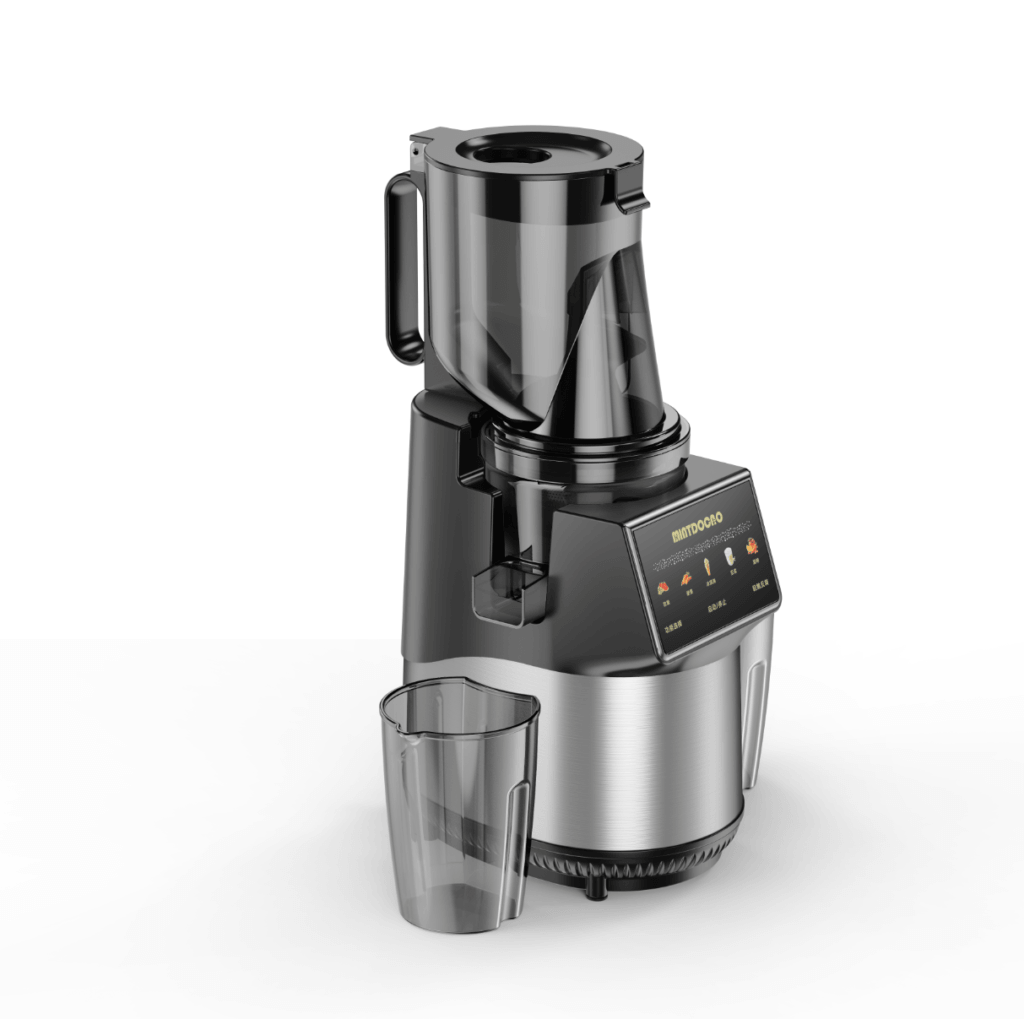
In juice bars, healthy dining establishments, hotels, chain restaurants, and food-processing facilities, the commercial slow juicer (also known as a commercial cold-press juicer or commercial masticating juicer) is a core piece of equipment for producing high-quality fresh juice. It uses low-speed pressing technology to maximize the retention of nutrients, enzymes, and natural flavors from fruits and vegetables while minimizing oxidation and foam. This directly determines drink quality, production efficiency, and customer experience. In recent years, continuous adjustments to US and European tariff policies on Chinese machinery and kitchen appliances have significantly affected buyers who rely on the Chinese supply chain. Understanding these changes and mastering the right inquiry methods can help buyers secure more cost-effective commercial slow juicer solutions.
Why Do US and EU Tariff Changes Matter So Much to Commercial Slow Juicer Buyers?
China is a major global manufacturing base for commercial slow juicers, with mature supply chains for motors, augers, filters, and food-grade materials, plus large-scale production capabilities. Many foodservice equipment distributors and juice-equipment buyers have long imported horizontal or vertical commercial slow juicers, dual-auger cold-press juicers, and similar products from China.
Tariff policy changes affect final landed costs in several ways:
- They directly raise procurement costs: The United States has long applied Section 301 tariffs and other additional duties on certain Chinese kitchen appliances and machinery (relevant HTS codes such as 8509), resulting in combined rates significantly higher than the base Most-Favored-Nation rate. Europe has also imposed anti-dumping or countervailing measures on some appliance and machinery categories. These extra costs ultimately appear in the equipment’s landed price (CIF/DDP).
- Quotes become more volatile and time-sensitive: When tariffs are adjusted, exclusions are extended, or new investigations begin, supplier quotes often have shorter validity periods, requiring buyers to decide faster. If a product currently enjoys a temporary exclusion, costs can rise quickly once the window closes.
- Supply-chain strategies are forced to adapt: Some buyers shift to third-country transshipment or local assembly, but this frequently brings longer lead times, higher logistics costs, and greater quality-control challenges. Sourcing directly from Chinese factories often still offers the best price and customization advantages—provided the full duty-inclusive landed cost is accurately calculated.
- They impact long-term total cost of ownership (TCO): Beyond tariffs, juice yield, pulp dryness, easy-clean design, motor lifespan, maintenance frequency, and after-sales response also matter. Quality Chinese commercial slow juicer suppliers typically deliver strong lifecycle value. Abandoning direct sourcing solely because of tariffs can increase hidden operating costs.
For equipment buyers, tariffs are not merely an “extra fee”—they are a critical variable in the purchasing decision. Staying informed about policy, accurately calculating landed costs, and establishing direct communication with reliable suppliers are essential for budget control.
How to Efficiently Obtain Quotes from Chinese Commercial Slow Juicer Suppliers
Getting accurate, comparable quotes requires a systematic approach to avoid information asymmetry and inefficient communication. Here are proven practical steps:
1. Clarify requirements and prepare a standardized Request for Quotation (RFQ)
Before contacting suppliers, compile a clear specification list:
- Type (horizontal, vertical, dual-auger, etc.), juicing speed, and processing capacity (e.g., hourly throughput)
- Motor power and speed (commonly low-speed 40–80 RPM), auger and filter material (food-grade stainless steel or advanced engineering plastics)
- Juice yield, pulp dryness, easy-to-disassemble design, and automatic pulp ejection features
- Voltage and frequency, certification standards (CE, ETL, NSF, FDA-related)
- Preferred trade terms (FOB, CIF, DDP), target port, estimated quantity, and lead time
Only with a uniform standard can quotes from different suppliers be properly compared.
2. Screen suppliers through reliable platforms and channels
Common channels include:
- B2B platforms (such as Alibaba.com and Made-in-China), prioritizing factory-type suppliers with Trade Assurance, high transaction volume, and strong reorder rates.
- Industry trade shows (such as the Guangzhou Hotel Supplies Exhibition or the Shanghai International Hospitality Equipment Exhibition) for on-site evaluation.
- Professional sourcing agents or local factory-audit services, especially useful for first-time buyers or large orders.
Focus on whether the supplier has in-house production capability, export experience, relevant certifications, and genuine customer case studies (such as chain juice brands or healthy dining groups).
3. Send a professional inquiry and request a complete quotation
In the initial contact, include your company background, application scenario (juice bar, hotel, restaurant kitchen, etc.), detailed specifications, optional target price range, and desired trade terms. Ask the supplier to provide:
- Detailed technical parameters, juice-yield test data, noise, and energy-consumption information
- Itemized FOB/CIF quotation (including packaging, testing, and documentation fees)
- Production lead time, payment terms, and warranty conditions (commonly 1–2 years)
- Certification documents and pricing for optional configurations (extra filters, pulp collection bins, program customization, etc.)
Quality suppliers usually respond with a preliminary proposal within 24–48 hours and are willing to conduct video meetings to show the factory and sample machines in operation.
4. Compare and verify, then calculate the true landed cost
Do not look only at the FOB price. Include tariffs, freight, insurance, customs clearance, local logistics, and installation/commissioning costs to arrive at the total cost of ownership. Also verify:
- Real factory video footage or third-party audit reports
- Sample machine testing (you can request juice-yield, juice fineness, and pulp-dryness tests using your actual fruits and vegetables)
- After-sales and spare-parts supply capability (augers, filters, seals, and other wear parts)
5. Key points for negotiation and ordering
- Clearly define payment milestones (typically 30% deposit, 70% before shipment)
- Agree on acceptance criteria and warranty period
- Consider a small trial order before scaling up procurement
Core Advantages of Chinese Commercial Slow Juicers and Buyer Recommendations
Chinese suppliers excel in low-speed motor control, high-precision augers and filters, food-grade material application, and customization, offering strong price competitiveness and relatively flexible lead times. Many factories already hold CE, ETL, NSF, and other international certifications and support OEM/ODM. For US and European buyers, in the current tariff environment, partnering with export-experienced suppliers who can provide clear landed-cost calculations is usually more reliable than simply chasing the lowest price.
Practical recommendations:
- Continuously monitor USTR (United States) and EU trade-remedy developments to assess any temporary exclusion windows.
- Maintain 2–3 backup suppliers to reduce single-source risk.
- For medium-to-large orders, prioritize partners that have local service networks or can provide remote commissioning support.
Tariff policies change, but the demand for quality commercial slow juicers does not. Mastering the policy impact, standardizing the RFQ process, and connecting directly with reliable Chinese suppliers enables equipment buyers to strike the best balance between cost and quality.
If you are currently looking for commercial slow juicers suitable for juice bars, healthy dining, or hotels, prepare a detailed RFQ right away and contact several verified Chinese factories to obtain the latest duty-inclusive landed quotes. Planning ahead is the key to staying competitive in a fluctuating trade environment.