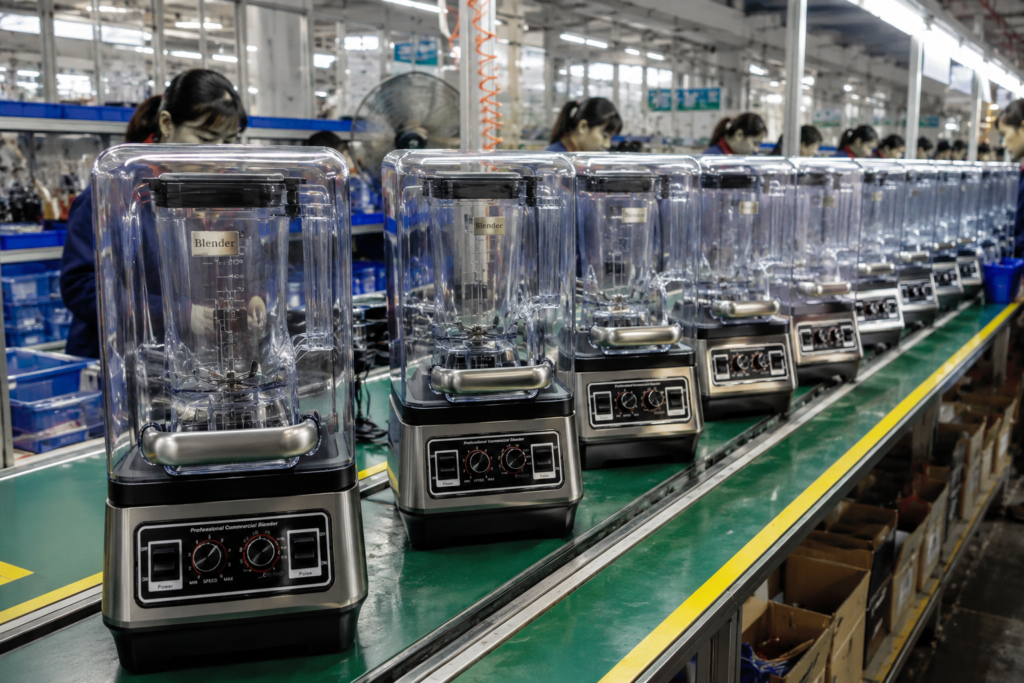
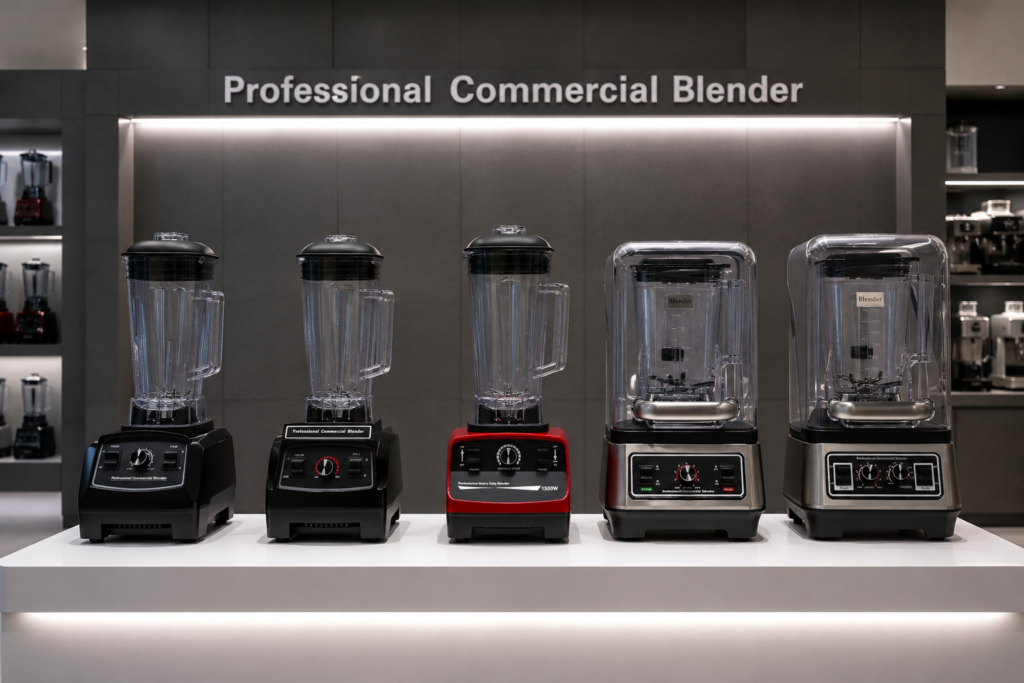
For European and American buyers sourcing commercial blenders (also known as high-power blenders or 破壁机) from China, tariffs are a key variable affecting landed costs. Small-batch purchases (typically dozens to a few hundred units, rather than full containers) are more sensitive to unit costs, so decisions must carefully weigh the latest tariffs, logistics, compliance, and alternative options. This guide covers the current policy landscape, cost structure, decision framework, and practical recommendations to help US and EU customers make more rational choices.
Current Tariff Policy Overview (as of 2026)
United States
Commercial/home high-power blenders and mixers are typically classified under HTS 8509.40 (food grinders, processors and mixers; fruit or vegetable juice extractors), with common subheadings such as 8509.40.00.15 (Blenders) or 8509.40.00.25 (Other food mixers). The Most-Favored-Nation (MFN) base rate is approximately 4.2%. For goods of Chinese origin, after stacking additional tariffs, the effective rate currently often sits around 16.7% (4.2% + roughly 12.5% in related additional duties).
Notably, the recent US-China reciprocal tariff reduction arrangement explicitly covers “Electromechanical food grinders, processors, mixers, fruit or vegetable juice extractors, with self-contained electric motor, for domestic uses.” Related blender/mixer products are expected to drop to MFN levels. Around 90% of covered products are planned to receive most-favored-nation treatment; final implementation details and effective dates should be monitored through official sources. Truly large-scale industrial equipment may fall under other chapters (such as 8438), but commercial blenders aimed at restaurants and cafes are mostly still classified under 8509.
Additionally, the de minimis exemption for low-value packages from China has been significantly tightened or suspended. Nearly all commercial imports now require formal customs entry and payment of duties and related fees. Small batches can no longer easily enter duty-free.
European Union
The EU’s MFN duty rates for HS/CN 8509.40 food mixers/grinders typically stand at around 2.2% (with some ranges of 0–3.7%). There are currently no widespread high anti-dumping duties specifically targeting high-power blenders. Low-value package rules are tightening further in 2026 and may involve fixed fees or full declarations. VAT is charged separately at the destination country’s rate and should not be overlooked.
Policies change quickly. Always verify the latest rates and exact classification via the USITC HTS database, the EU’s Access2Markets tool, or a professional customs broker before each purchase.
Cost Structure and Decision Points for Small-Batch Purchases
Landed cost for small batches = Product FOB price + Freight + Duties + Customs clearance/broker fees + Local delivery + Potential inspection/certification costs. In the US, duties can range from single to double digits depending on final relief outcomes; in the EU the duty burden is relatively lower but still compounds with VAT.
Recommended Decision Framework:
Accurately Calculate Landed Cost
- Confirm the precise HS/HTS code and country of origin (distinguish domestic-type from true industrial models).
- Use online tariff calculators or obtain quotes from a customs broker, including current effective rates and fees such as MPF/HMF.
- Compare: Direct sourcing from China vs. production in Vietnam/Mexico or local inventory.
In small batches, per-unit freight and fixed customs costs are amplified—negotiate cost-sharing with suppliers or use LCL (less-than-container-load) shipping.
Evaluate the Tariff Impact Threshold
- If US rates ultimately settle at the MFN level of ~4.2%, Chinese manufacturing retains strong value (mature supply chains, ready molds, flexible customization of power and blades, fast lead times).
- If additional tariffs remain high, calculate whether the post-tariff profit margin is still acceptable. Commercial high-power blenders are mid-to-high-end foodservice equipment; brand premium, durability, low noise, and easy-cleaning features can partially offset higher costs.
- EU rates are lower, so tariff pressure is milder—focus more on CE certification, food-contact material safety, and energy-efficiency compliance.
Strategies Specific to Small Batches
- Prioritize samples and trial orders: Test motor longevity, blending performance, and the clearance process with small quantities before scaling up.
- Optimize logistics: Use air freight for urgent orders and sea LCL for regular ones; consider third-party overseas warehouses or bonded warehouses to defer duty payment.
- Supplier selection: Prefer factories with export experience, familiarity with US/EU certifications (UL/ETL, CE, NSF-related food-contact standards), and the ability to provide complete commercial invoices and certificates of origin. Ask them to assist with HS code confirmation and clearly distinguish “commercial-grade” from household models.
- Alternatives and hedging: Evaluate a “China +1” approach (Vietnam, Thailand, etc.) or local private-label assembly in the US or Europe. Monitor the progress of US-China tariff reductions—consider staggered orders or short-term observation.
- Compliance and risk: Ensure blades, jars, and other food-contact parts meet regulations to avoid inspections due to misclassification or origin issues. Even small batches require formal entry—working with a reliable customs broker is essential.
When to Continue Sourcing from China vs. Looking Elsewhere
- Continue with China: Complete supply chain, flexible customization (power, blade materials, programs), competitive unit price, stable quality; advantages become clearer once tariffs fall to MFN levels; end foodservice customers are sensitive to performance and price, with enough premium room to absorb costs.
- Consider alternatives: Persistently high tariffs that make margins unacceptable; need for shorter lead times or a “non-China” origin label; inability to amortize logistics and compliance costs at small volumes.
- Middle path: Produce core motors and blades in China and perform final assembly in a third country or the destination market to legally optimize origin and duty rates (strict compliance required—avoid any circumvention risks).
Practical Checklist
- Verify the latest HTS/HS code and rates (including any Section 301 overlays or reciprocal reductions).
- Obtain FOB quotes and certification documents from at least three suppliers (especially food-contact and safety standards).
- Calculate full landed cost and run sensitivity analysis (e.g., ±5–10% on duty rates).
- Confirm logistics mode and customs broker.
- Assess local foodservice/retail market demand and pricing headroom.
- Monitor policy developments: Implementation details of the US-China arrangement and EU low-value package rules.
Conclusion: US and EU buyers should not simply abandon small-batch purchases of Chinese commercial high-power blenders because of “high tariffs.” The recent reciprocal arrangement has included related mixer/blender categories in potential relief, and once implemented, the cost and flexibility advantages of China’s supply chain are likely to reassert themselves. The keys are precise cost calculation, logistics and compliance optimization, and supply-chain flexibility. Small batches are best approached with a test-then-scale mindset and data-driven decisions rather than emotional reactions. Partner with professional trade advisors or customs brokers and periodically review policies and costs to stay competitive amid tariff fluctuations.
(This article is based on publicly available tariff information and trade developments. For specific actions, always refer to the latest official regulations and professional legal/customs advice. Policies may change at any time. Classification for true industrial-grade equipment may differ—always verify separately.)