
The Ultimate B2B Guide to Sourcing Slow Juicers: Maximizing ROI for Commercial Buyers and Distributors
With health and wellness transitions shifting from a temporary trend to a permanent lifestyle, the global demand for high-quality juicing appliances has skyrocketed. For kitchen appliance distributors, OEM/ODM brands, and commercial juice bar owners, finding the right Slow Juicer (Cold Press Juicer) manufacturer is no longer just about sourcing a product—it is about securing a competitive edge in a lucrative market.
However, navigating the B2B wholesale landscape for slow juicers comes with its own set of challenges. From understanding technical specifications like torque and RPM to evaluating supply chain reliability, bulk buyers need more than just a retail sales pitch.
In this comprehensive B2B sourcing guide, we will break down why slow juicers are dominating the market, what technical metrics matter most to commercial buyers, and how to choose a manufacturing partner that guarantees a high ROI.
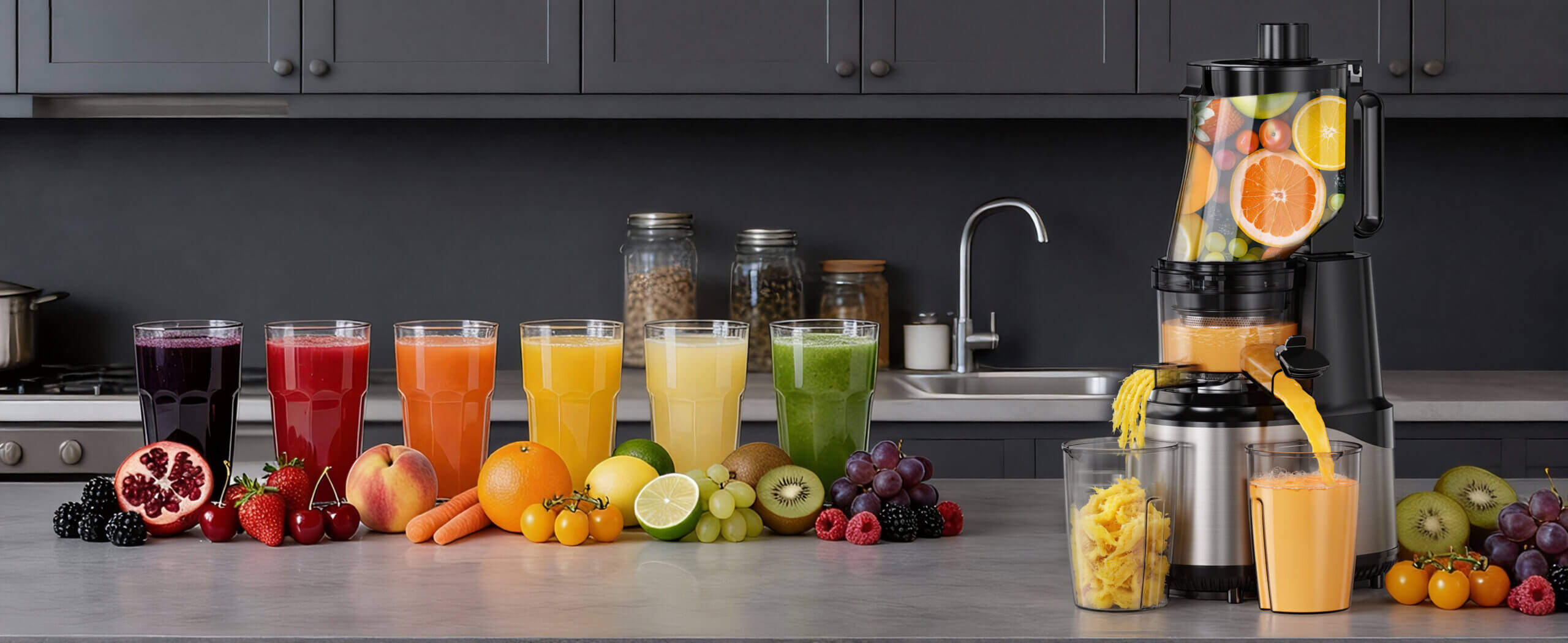
1. The Market Surge: Why Slow Juicers Mean High Margins for Distributors
Before allocating your procurement budget, it is essential to understand the market dynamics. Traditional centrifugal juicers, while cheap, are rapidly losing market share to slow juicers (cold press juicers).
The Cold Press Advantage
Unlike centrifugal models that use fast-spinning blades that generate heat and accelerate oxidation, slow juicers utilize a slow-rotating auger to crush and press fruits and vegetables. This process operates at a lower RPM (usually between 40 to 80 RPM), which:
Preserves Heat-Sensitive Nutrients: Vitamins, enzymes, and antioxidants remain intact.
Yields More Juice: Minimizes food waste by producing a significantly drier pulp, increasing yield by up to 30%.
Extends Shelf Life: Less aeration means the juice can be stored for up to 72 hours without separating or losing flavor.
The B2B Takeaway: Consumers are willing to pay a premium for health. For distributors and retail brands, this translates into higher average order values (AOV) and substantially better profit margins compared to low-end traditional blenders and juicers.
2. Technical Specifications That Matter to Bulk Buyers
When sourcing slow juicers at a wholesale level, reading consumer reviews isn’t enough. B2B buyers must evaluate the engineering under the hood to ensure low return rates and high customer satisfaction. Here are the critical technical benchmarks to look for in your supplier’s catalog:
AC Induction Motor vs. DC Motor
AC Motors (Commercial Grade): Heavier, more expensive, but highly durable. They offer higher torque, operate quietly, and can run continuously for 30–45 minutes without overheating. Ideal for premium household brands and light commercial use.
DC Motors (Consumer Grade): Lighter and more cost-effective. While they are great for compact, budget-friendly retail models, they usually require a cool-down period after 15–20 minutes of continuous operation.
Torque and Auger Material
A slow juicer’s efficiency is determined by its torque, not its wattage. High torque allows the machine to crush hard root vegetables (like carrots and ginger) and fibrous greens (like celery) without jamming. Ensure the supplier uses Ultem PEI or food-grade heavy-duty polymers for the auger, as these materials withstand extreme pressure without degrading.
Feed Chute Diameter
Time is money for the end-user. Look for manufacturers offering Wide-Mouth Slow Juicers (typically 75mm to 85mm or larger). A wider chute allows for whole-apple juicing, drastically reducing prep time—a massive selling point for both busy families and commercial juice bars.
3. Customization and Compliance: OEM/ODM Sourcing Checklists
For B2B buyers looking to establish their own brand presence or fulfill specific regional requirements, customization and certifications are non-negotiable.
Regulatory Compliance and Certifications
Entering international markets requires strict adherence to safety and food-contact standards. Your manufacturing partner must provide verified certifications, including:
North America: FDA, UL, ETL, NSF (for commercial use), BPA-Free certificates.
Europe: CE, GS, RoHS, LFGB, CB.
Global: ISO9001 quality management system certification for the factory itself.
OEM/ODM Capabilities
If you are looking to differentiate your product line, verify the supplier’s capacity for customization:
Custom Molds & Aesthetics: Can they modify the housing, offer trending colorways (matte black, brushed stainless steel, pastel tones), or laser-etch your logo?
Packaging Solutions: Do they offer drop-test approved IMGB (International Mail Order Group) packaging for e-commerce clients, or high-end retail color boxes?
MOQ (Minimum Order Quantity): A flexible supplier should offer reasonable MOQs (e.g., 500 to 1,000 units for custom branding) to help you test the market.
4. How to Evaluate a Slow Juicer Manufacturer's Supply Chain Reliability
A low per-unit price means nothing if your supplier misses critical delivery windows or delivers a batch with a 5% defect rate. When auditing potential factory partners, ask the following operational questions:
Daily Production Capacity & Lead Times
Ensure the factory has the infrastructure to scale with your growth. Ask about their peak-season lead times. A reliable manufacturer should maintain a standard lead time of 25 to 35 days for initial OEM orders, and shorter for repeat runs.
Quality Control (QC) Infrastructure
A reputable B2B supplier should implement a multi-stage QC process:
IQC (Incoming Quality Control): Testing raw materials and motor components before assembly.
IPQC (In-Process Quality Control): Testing motor noise levels, torque consistency, and waterproof seals on the assembly line.
FQC/OQC (Final/Outgoing Quality Control): Random sampling, drop tests, and continuous running tests before container loading.
After-Sales Service and Spare Parts Support
The longevity of your business relationship depends on post-purchase support. Negotiate a 1% to 2% complimentary spare parts allowance (such as extra strainers, silicone seals, and pushers) with your bulk order. Furthermore, look for suppliers offering a 3-to-5-year warranty on the motor, which you can pass on to your customers as a mark of ultimate quality assurance.
Conclusion: Partner with a Leading Slow Juicer Expert
The global cold press juice market is projected to grow sustainably over the next decade. Investing in premium slow juicers is a strategic move that can elevate your product portfolio, boost retail margins, and build long-term brand equity.
Success in this market relies entirely on the strength of your supply chain. By prioritizing high-torque motors, food-safe certified materials, flexible OEM/ODM capabilities, and stringent quality control, you can deliver a product that outperforms the competition.
Looking to upgrade your inventory or launch your own line of premium slow juicers?
As a professional kitchen appliance manufacturer with over a decade of OEM/ODM experience, we specialize in high-yield, durable cold press juicers certified for global markets.
[Contact our B2B sales team today] to receive our latest product catalog, detailed factory audit reports, and a customized wholesale quote for your market.