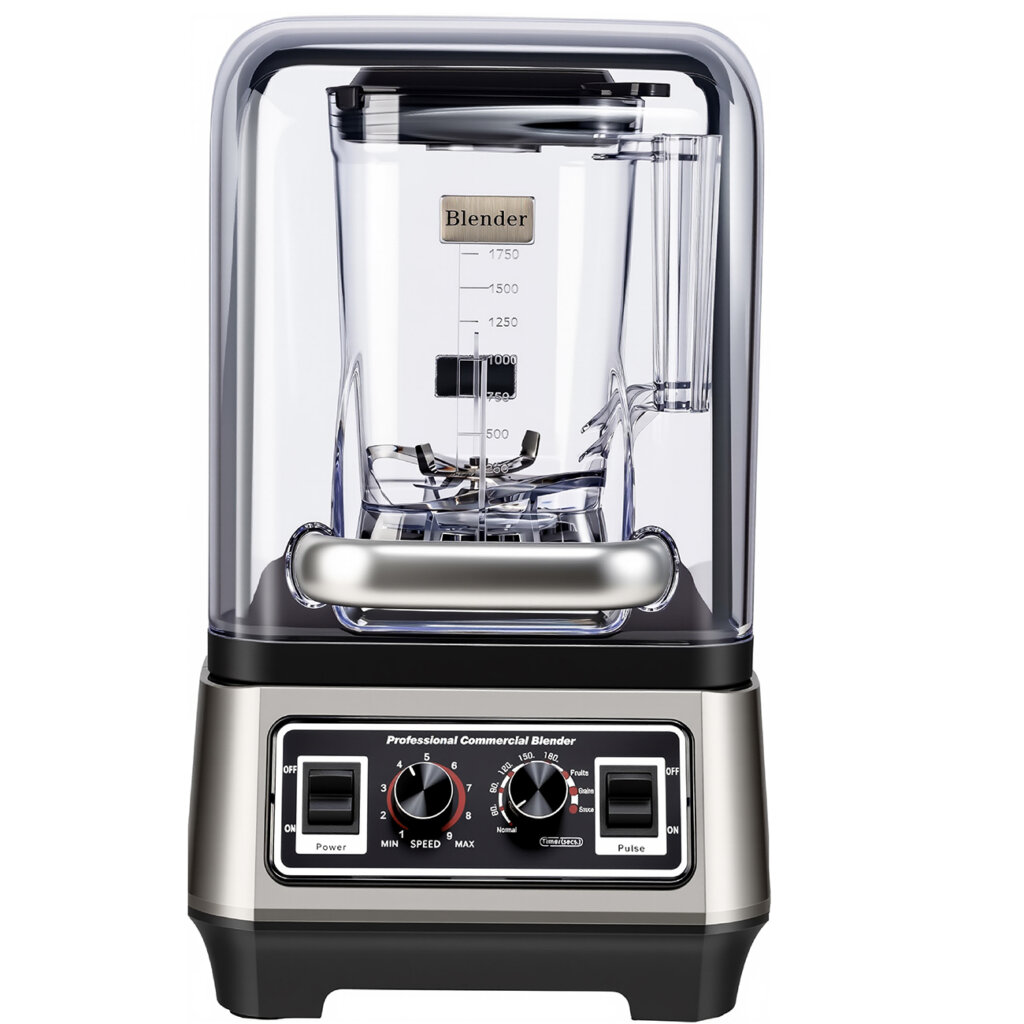
Sourcing commercial high-speed blenders (also known as commercial blenders or high-performance blenders) from the Chinese supply chain offers clear price advantages and production flexibility. However, for European customers, small-batch orders (typically 5–50 units) often come with multiple risks related to compliance, quality consistency, logistics, and after-sales support.
As a European importer, distributor, juice bar, hotel, catering business, or fitness nutrition company, you bear the ultimate legal responsibility for product compliance. This article systematically outlines the key points European buyers must focus on when purchasing commercial high-speed blenders in small batches from China, helping you avoid common pitfalls.
1. Compliance Certification is the Core Requirement (Highest Priority)
The European market has strict regulations. Non-compliant products can easily be detained by customs, banned from sale, or face market surveillance penalties.

1.1 CE Marking
Commercial high-speed blenders must carry a genuine and valid CE mark covering the following directives:
- Low Voltage Directive (LVD)
- Electromagnetic Compatibility (EMC) Directive
- Machinery Directive (2006/42/EC – fully transitioning to Regulation (EU) 2023/1230 from 20 January 2027)
Always request from the Chinese supplier:
- Declaration of Conformity (DoC)
- Complete technical documentation
- Test reports issued by accredited laboratories (preferably referencing relevant EN 60335-2-14 standards)
Common risks in the Chinese supply chain: Some factories only apply the CE mark while providing incomplete documents, self-declarations, or even fake certificates. It is recommended to verify the authenticity of certificates and, if necessary, conduct third-party retesting of samples in Europe.
1.2 Food Contact Materials (FCM)
All parts that come into contact with food (blades, blending jars, seals, lids, etc.) must comply with:
- Regulation (EC) No 1935/2004
- Plastic Materials Regulation (EU) No 10/2011
Request a detailed Declaration of Compliance specifying material grades and migration test results. Prefer food-grade Tritan, borosilicate glass, or stainless steel blades. Markets such as Germany place additional value on LFGB reports.
1.3 Other Mandatory Requirements
- RoHS (Restriction of Hazardous Substances)
- REACH (SVHC notification obligations if applicable)
- Voltage strictly matching the European standard of 230V/50Hz
- Correct European plugs and labeling (including CE mark, “Made in China”, safety warnings, and WEEE recycling symbol where required)
- Noise control and safety interlock devices must meet relevant requirements
2. Supplier Selection and Due Diligence
Small-batch orders place higher demands on supplier screening. Many factories do not accept low MOQs or will significantly increase prices.
Key selection criteria:
- Proven experience exporting to Europe (request past shipment cases and customer feedback)
- Ability to provide complete compliance documentation and technical support
- Efficient communication and timely responses
- Basic quality control systems and testing capabilities
It is advisable to conduct factory audits or commission third-party inspections. Avoid making decisions based solely on low-price quotations. The lowest price often means understated motor power, inferior blade materials, or compromised certifications.
3. Quality and Production Control (Critical for Small Batches)
Quality variations are more common in small-batch production.
Recommended process:
- First purchase samples for comprehensive testing (blending performance, noise level, continuous operation stability, temperature rise, ease of cleaning, jar sealing, etc.)
- Lock detailed technical specifications in writing (motor power, speed, blade material, jar capacity and material, etc.)
- Mandate third-party Pre-Shipment Inspection (PSI) — recommended providers include SGS, Bureau Veritas, Intertek, etc.
- Pay special attention to packaging strength against shock and moisture
For commercial equipment, focus particularly on high-power motor durability and heat dissipation, safety interlock devices, blade sharpness and durability, and the ability to operate continuously for extended periods.
4. Logistics, Packaging, and Customs Clearance
Small batches are typically shipped by air freight, express courier, or sea LCL (Less than Container Load).
- Incoterms recommendation: For first-time cooperation, choose FOB or CIF to maintain control over customs clearance. Only consider DDP if the supplier has proven operational capability in the EU.
- Documentation requirements: Commercial invoice, packing list, bill of lading, certificate of origin, CE declaration, and food contact material declaration must be complete and consistent with the goods.
- HS codes commonly fall under the 8509 series. Duty rates are generally low, plus VAT of the destination country.
Packaging must be sufficiently robust to protect high-speed precision components during long-distance transport.
5. Payment Terms, Contracts, and After-Sales Support
- Payment methods: Common terms are 30% deposit + 70% before shipment. For small batches or first orders, use more secure payment tools to reduce risk.
- Key contract clauses: Clearly define specifications, list of required certificates and documents, delivery timeline, warranty period (recommend at least 12 months), spare parts supply pricing and lead times, inspection rights, and liability for breach.
- After-sales challenges: Slow spare parts delivery from Chinese factories is a common issue. Agree in advance on the supply mechanism for wear parts (blades, seals, jars, etc.) or stock critical parts in Europe.
6. Comprehensive Cost Calculation
True landed cost includes:
- Unit price
- Certification and testing fees
- International freight and insurance
- Import duties + VAT
- Customs clearance and inspection fees
- Potential storage or rework costs
Unit costs for small batches are almost always significantly higher than large orders. Budget accordingly in advance.
7. Summary of Common Pitfalls
- Trusting the factory’s verbal “CE certified” claim without checking documents
- Skipping sample testing and pre-shipment inspection
- Vague product specifications
- Choosing only the lowest-priced supplier
- Overlooking voltage, plug type, and labeling details
- Underestimating the importance of food contact material declarations
- Failing to plan for spare parts supply
Practical Action Checklist
- Define technical specifications and compliance requirements
- Screen suppliers with EU export experience and verify documentation
- Test samples thoroughly
- Sign a detailed contract
- Arrange third-party pre-shipment inspection
- Confirm all documents are complete before shipment
- Calculate full landed cost
- Establish local spare parts and after-sales channels
Conclusion
Sourcing commercial high-speed blenders from China in small batches is entirely feasible and can deliver good value for money — provided that compliance and quality control are treated as non-negotiable priorities. The European market rewards reliable products with complete documentation and severely penalizes any shortcuts.
By systematically following the points above, European buyers can greatly reduce the risks of customs delays, cargo detention, and later market issues. For first-time cooperation, it is advisable to seek assistance from experienced sourcing agents or EU compliance consultants to make the process more stable and efficient.
If you are looking for reliable Chinese suppliers of commercial high-speed blenders or need support with compliance document review, feel free to consult professional teams.