
In the global foodservice, hotel, and juice bar industries, commercial slow juicers (also known as cold-press juicers or low-speed masticating juicers) have become essential equipment for improving product quality and profitability. These machines use slow extraction to retain more nutrients, reduce oxidation, and operate more quietly, making them ideal for high-volume commercial settings. China, as a major global manufacturing hub, supplies a large share of cost-effective commercial slow juicers. However, recent international conflicts and wars have genuinely impacted transportation, energy, raw materials, and procurement, creating real concerns for buyers in North America and Europe. This article focuses on these practical effects and offers actionable procurement insights and strategies to help you optimize supply chain decisions.
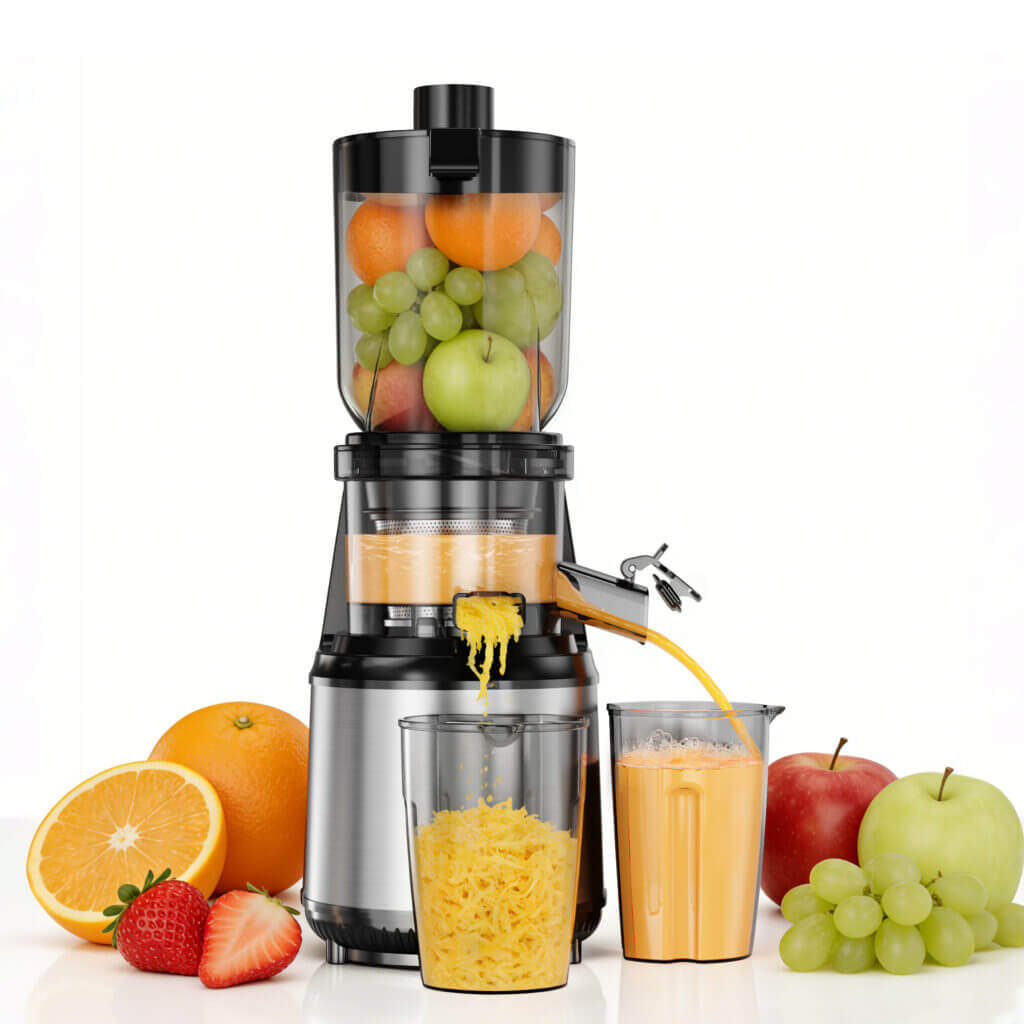
Why Commercial Slow Juicers Rely on Chinese Supply Chains
Commercial slow juicers typically feature high-performance motors, food-grade stainless steel augers, durable screens, and large-capacity designs suitable for continuous operation. Chinese manufacturers excel in scale production, cost control, and technical iteration. Many European and North American brands source OEM or private-label products from Chinese factories. Direct procurement from China can significantly lower unit costs, but it also exposes the supply chain to geopolitical risks.
Actual Impacts of International Conflicts on Transportation: Delays and Rising Costs
European buyers face the most direct effects. Conflicts related to the Red Sea have disrupted the Suez Canal route, forcing many container ships departing from China to detour around the Cape of Good Hope. This typically adds 10–14 days to the voyage, increases fuel consumption and insurance costs, and has driven up Asia-to-Europe container freight rates significantly. Commercial slow juicers, as mid-sized appliance cargo, see freight accounting for a larger share of total costs, raising landed prices and creating uncertainty in delivery windows that can disrupt equipment upgrade plans for juice bars or hotels.
North America relies primarily on trans-Pacific routes, so direct delays are fewer. However, global capacity constraints and linked freight rates can still indirectly increase costs on some lanes. Potential tensions in the Taiwan Strait or South China Sea that affect East Asian port shipments or force further rerouting could also extend transit times from China to the U.S. West Coast. Buyers should build in longer lead-time buffers and consider air-freight contingencies (though at much higher cost).
How Energy Price Volatility Feeds into Procurement Costs
Elevated global energy prices driven by conflicts directly raise bunker fuel costs and, in turn, all ocean freight rates. Europe is particularly sensitive to energy price swings amid its transition, with higher logistics costs ultimately reflected in the total purchase price of commercial slow juicers. At the same time, if Chinese factories face rising electricity or production energy costs due to energy market fluctuations, this may lead to adjustments in ex-factory prices. When requesting quotes, buyers should ask suppliers for itemized pricing (equipment + freight + insurance) and seek medium- to long-term price-lock clauses to hedge against volatility.
Potential Bottlenecks in Raw Materials and Production
Key components of commercial slow juicers involve stainless steel, food-grade plastics, motors, and electronic control systems. If conflicts disrupt the global flow of related raw materials or China’s import channels for energy and minerals, production costs could rise or short-term supply tightness could occur. While large-scale shortages have not yet materialized, procurement cycles have already lengthened in some cases. European and North American buyers therefore face higher inventory pressure and compliance scrutiny (for example, regarding dual-use materials under export controls).
Practical Procurement Response Strategies
- Diversify suppliers and manage inventory: Avoid complete reliance on a single Chinese factory. Evaluate alternative capacity in Southeast Asia or Mexico, while moderately increasing safety stock to cover transportation delays.
- Optimize transportation and contracts: Work with experienced freight forwarders and prioritize multimodal options (sea + rail). Clearly define delay liabilities, price adjustment mechanisms, and force majeure clauses in contracts.
- Cost calculation and long-term partnerships: Calculate total cost of ownership (equipment price + freight + duties + inventory holding costs) rather than focusing only on the ex-factory price. Build long-term agreements with reliable Chinese suppliers to secure priority production slots and shipping capacity.
- Quality and compliance checks: Require third-party inspections, CE/UL certifications, and food-contact material reports to reduce the risk of quality disputes arising from delays.
- Market monitoring: Continuously track Red Sea developments, energy prices, and East Asian shipping indices, and adjust order timing accordingly.
Conclusion: Balancing Cost Advantages with Supply Chain Resilience
Commercial slow juicers remain an excellent choice for enhancing the competitiveness of commercial juice operations, and the cost-performance advantages of Chinese manufacturing will be hard to fully replace in the short term. However, international conflicts have already changed transportation times, energy costs, and procurement certainty. North American and European buyers who proactively manage these risks—through longer lead-time planning, diversification, and strong contracts—can continue to benefit from Chinese manufacturing while safeguarding business stability.
If you are looking for reliable commercial slow juicer suppliers or need customized supply chain solutions, leave a comment or contact a professional procurement advisor for the latest freight rates and factory resources. Acting promptly will help you maintain a competitive edge in an uncertain global environment.