
Yes. Restaurants, smoothie shops, juice bars, cafés, bars, hotels, food trucks and other foodservice businesses can buy commercial blenders directly from Chinese suppliers.
While many people assume that Chinese suppliers only work with large distributors or customers ordering hundreds of machines, this is not always the case. Many commercial blender manufacturers and suppliers can support small-volume orders, sample orders, OEM projects and repeat purchases for overseas customers.
For small and medium-sized foodservice businesses in the United States, Canada, the United Kingdom, Europe and Australia, sourcing a commercial blender directly from China can provide competitive pricing, flexible order quantities and access to a wide range of commercial blending equipment.
However, choosing the right supplier requires more than simply comparing prices. Buyers should also consider certifications, voltage, food-contact materials, warranty, spare parts, shipping and after-sales support.
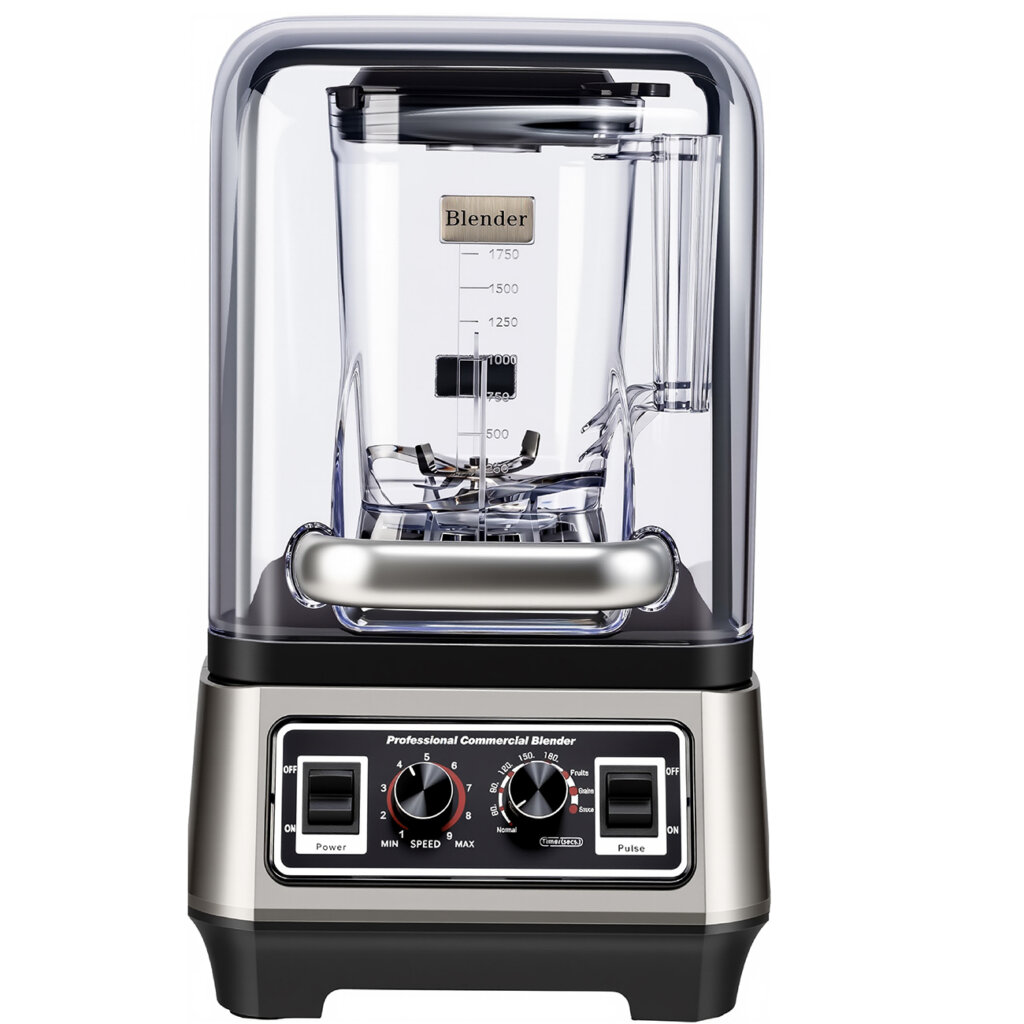
Why Buy a Commercial Blender From China?
China has a large and mature small-appliance and foodservice equipment manufacturing industry. Commercial blender suppliers can offer a wide variety of machines for different foodservice applications.
For overseas restaurant owners and purchasing managers, the main advantages can include:
1. Competitive Factory Pricing
Buying directly from a manufacturer or factory-linked supplier can reduce the cost compared with purchasing through multiple distribution channels.
This can be particularly useful for:
- New restaurants
- Small smoothie shops
- Juice bars
- Bubble tea shops
- Cafés
- Food trucks
- Catering businesses
- Independent hotels
- Small restaurant chains
A business that only needs two, five or ten commercial blenders may still benefit from contacting a China-based supplier.
2. Low MOQ Options
Large commercial equipment distributors may focus on larger orders. In contrast, some Chinese commercial blender suppliers can offer lower minimum order quantities.
Depending on the supplier and product, buyers may be able to order:
- 1 unit for product testing
- 2–5 units for a new restaurant
- 10–20 units for a small chain
- Larger quantities for distributors or wholesalers
This makes direct sourcing from China particularly interesting for small and medium-sized foodservice businesses.
3. OEM and Private Label Manufacturing
China is also an important manufacturing base for OEM and private-label products.
For example, a restaurant equipment distributor may want to sell a commercial blender under its own brand.
A manufacturer may be able to provide:
- Custom logo
- Custom packaging
- Product labeling
- Custom colors
- Product specifications
- Customized accessories
- Private-label production
OEM requirements vary by manufacturer, so buyers should discuss minimum order quantities, tooling, packaging and certification requirements before placing an order.
Who Buys Commercial Blenders From China?
A commercial blender is not only useful for large restaurant chains.
Many smaller businesses have regular demand for high-speed blending equipment.
Smoothie Shops
Smoothie shops often need high-performance blenders for fruit, vegetables, ice, protein shakes and other beverages.
For this type of business, important features may include:
- High-speed motor
- Heavy-duty blades
- Large-capacity container
- Programmable settings
- Continuous operating capability
- Easy-to-clean components
Juice Bars
Juice bars and health beverage businesses may use commercial blenders to prepare smoothies, fruit drinks and other blended beverages.
Noise level, durability and cleaning efficiency can be particularly important in a customer-facing environment.
Cafés and Coffee Shops
Cafés may use commercial blenders for smoothies, frappes, milkshakes and other specialty drinks.
A compact commercial blender can be useful when counter space is limited.
Restaurants
Restaurants may use commercial blenders for sauces, soups, dressings, marinades and beverages.
For professional kitchens, durability and reliable operation can be more important than consumer-style features.
Bars and Hotels
Bars and hotels may require commercial blenders for cocktails, frozen drinks and other beverage applications.
In high-volume environments, motor performance, blade durability and spare-parts availability should be carefully evaluated.
Food Trucks and Small Businesses
Food trucks and small beverage businesses often have limited budgets and limited space.
A compact commercial blender with a suitable capacity can be a practical option.
Is It Worth Buying Only 1–5 Commercial Blenders From China?
Yes, it can be.
A small order can be especially useful when opening a new restaurant or testing a new beverage concept.
For example, a new smoothie shop may initially need:
2 commercial blenders + 1 backup machine
Instead of purchasing a large quantity, the business can first test the machines under real operating conditions.
If the equipment performs well, the buyer can place larger repeat orders later.
This approach can reduce purchasing risk.
For this reason, a supplier offering sample orders and low MOQ commercial blenders can be attractive to small foodservice businesses.
What Should You Check Before Buying a Commercial Blender From China?
Price should not be the only factor when choosing a supplier.
A commercial blender is professional foodservice equipment, so buyers should evaluate several technical and commercial factors.
1. Electrical Voltage and Frequency
Always confirm that the machine is compatible with the destination market.
For example:
United States and Canada
- 120V
- 60Hz
Most European markets
- Approximately 220–240V
- 50Hz
The correct plug, power rating and electrical configuration should also be confirmed before ordering.
2. Safety Certifications
Certification requirements depend on the destination country and the exact product.
US buyers may encounter requirements or expectations involving certifications such as NSF, UL or ETL, depending on the product and application.
European buyers may need to consider requirements involving CE, EMC, LVD and RoHS, among others.
Most importantly, buyers should verify certification information for the specific model they intend to purchase.
A supplier saying that a factory has certification does not automatically mean every model is certified.
3. Food-Contact Materials
The blender container, lid, blade assembly and other components that contact food should be suitable for the intended application.
Ask the supplier for relevant material information and compliance documentation.
This is especially important for commercial foodservice applications.
4. Motor and Blade Performance
A commercial blender is different from a household blender.
When comparing products, consider:
- Motor power
- RPM
- Blade design
- Continuous operating capability
- Container capacity
- Cooling system
- Noise level
- Expected service life
Do not judge commercial blender performance only by the wattage printed on the product.
5. Warranty
A professional kitchen cannot afford long periods of equipment downtime.
Before ordering, ask:
- How long is the warranty?
- What components are covered?
- Who pays for replacement parts?
- How are warranty claims handled?
- Is technical support available?
A clear warranty policy can be an important factor when choosing a commercial blender manufacturer.
Spare Parts Are Important
One of the most overlooked factors when buying commercial blending equipment is spare-parts availability.
Common replacement components may include:
- Blender jars
- Blade assemblies
- Lids
- Sealing rings
- Tamper tools
- Motor components
- Couplings
- Switches
- Control panels
A supplier that can provide spare parts can offer significant value over the long term.
For example, a restaurant may purchase three commercial blenders today but need replacement jars or blade assemblies several months later.
Reliable spare-parts support can help extend the useful life of the equipment and reduce downtime.
Can Chinese Suppliers Support Small B2B Orders?
Yes, some suppliers can.
However, buyers should distinguish between different types of suppliers.
Manufacturer
Usually offers:
- Factory pricing
- OEM/ODM
- Product customization
- Technical specifications
- Larger production capacity
Trading Company
May offer:
- Multiple product categories
- Flexible sourcing
- Easier communication
- Consolidated shipments
Distributor
Usually focuses on:
- Local inventory
- Faster delivery
- Local service
- Local warranty
For a restaurant buying only one or two machines, a local distributor may offer convenience.
For businesses looking for better factory pricing, OEM production or long-term sourcing, working directly with a qualified manufacturer may be more attractive.
China Commercial Blender Supplier vs Local Distributor
Both options have advantages.
| Factor | China Supplier | Local Distributor |
|---|---|---|
| Factory pricing | Often competitive | Usually higher |
| MOQ | Depends on supplier | Often low |
| OEM | Strong advantage | Limited |
| Customization | Usually available | Limited |
| Shipping time | Longer | Faster |
| Local service | Depends on supplier | Usually easier |
| Spare parts | Should be confirmed | Often readily available |
| Product selection | Very broad | Depends on distributor |
The best choice depends on the buyer’s order quantity, budget, delivery requirements and technical requirements.
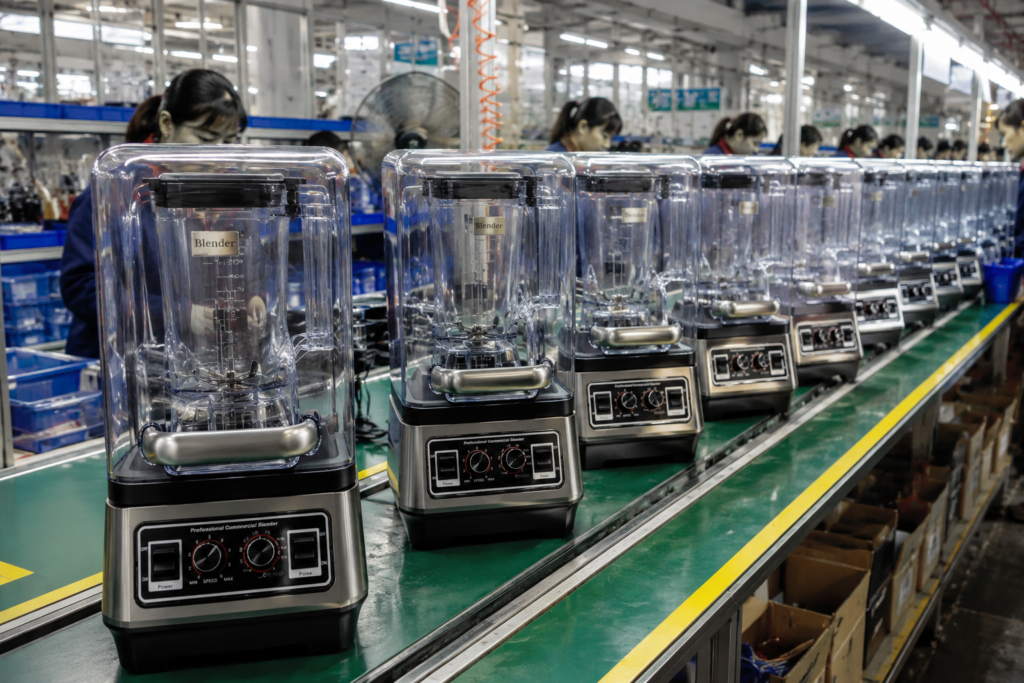
How to Find a Reliable Commercial Blender Manufacturer in China
Before placing an order, ask the supplier for detailed information.
A professional supplier should be able to provide:
- Company information
- Factory information
- Product specifications
- Product test reports
- Certification documents
- Food-contact material information
- Warranty terms
- Spare-parts information
- MOQ
- Sample order terms
- Production lead time
- Packaging specifications
- Shipping options
It is also a good idea to order a sample before committing to a larger quantity.
Testing the actual machine is often more valuable than relying only on product photographs or specifications.
Why Sample Orders Are Important
A sample order allows a restaurant or distributor to evaluate the equipment before making a larger investment.
During testing, consider:
Performance
Can it handle the ingredients and workload required by the business?
Noise
Is the noise level acceptable for the restaurant environment?
Durability
Does the machine remain stable during repeated operation?
Cleaning
Can the container, lid and blade assembly be cleaned efficiently?
User Experience
Can employees operate the machine easily?
After-Sales Support
Can the supplier provide replacement parts and technical assistance?
A successful sample test can provide greater confidence before a larger order.
What Is the Best Commercial Blender for a Restaurant?
here is no single commercial blender that is best for every restaurant.
The correct machine depends on the application.
For example:
Smoothie Shops
Look for:
- High-speed blending
- Durable blades
- Large container
- High-frequency operation
- Easy cleaning
Restaurants
Consider:
- Heavy-duty construction
- Reliable motor
- Food-contact compliance
- Multiple speed settings
- Easy maintenance
Bars
Consider:
- Ice-crushing performance
- Noise level
- Fast blending
- Compact footprint
Cafés
Consider:
- Compact design
- Moderate noise
- Beverage-focused programs
- Easy operation
Food Trucks
Consider:
- Compact size
- Appropriate power
- Easy transportation
- Reliable operation
- Simple maintenance
Final Thoughts: Can You Buy Commercial Blenders Directly From China?
Yes.
For restaurants and foodservice businesses that need only a small number of machines, purchasing directly from China can be a practical sourcing option.
The biggest advantages can include:
- Competitive pricing
- Low MOQ options
- Factory-direct sourcing
- OEM and private-label opportunities
- Wide product selection
- Spare-parts availability
- Flexible customization
However, buyers should not choose a supplier based on price alone.
Certification, electrical compatibility, food-contact materials, motor performance, warranty, spare parts and after-sales service are all important.
For small restaurants, smoothie shops, juice bars, cafés, hotels, bars and foodservice distributors, a supplier that supports low-MOQ commercial blender orders can provide a flexible way to test equipment before making larger purchases.
If you are looking for a commercial blender supplier in China, consider requesting a sample first, testing the machine in your actual business environment, and then negotiating a larger order based on the results.